



RAPSTAR 2026 Draws Record 12,953 Applicants as Japan Searches for Its Next Rap Star
Japan’s search for its next rap star has reached a new level.
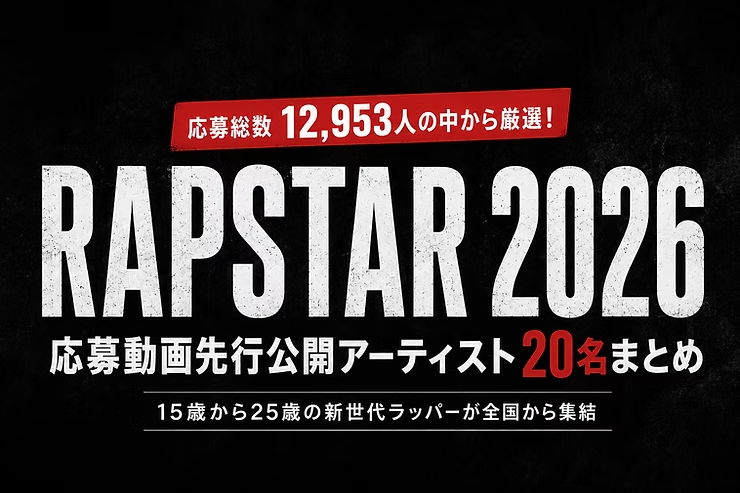
RAPSTAR 2026 has attracted 12,953 applicants, giving this year’s competition one of its biggest pools of aspiring rappers yet. The latest edition is now moving into its audition phase, with selected audition videos beginning to appear from August 15.
The scale of this year’s application pool highlights the continuing growth of Japanese hip-hop and the number of young artists looking for an opportunity to establish themselves in the industry.
For fans, RAPSTAR 2026 could become an important place to discover the rappers who will shape the next generation of Japanese hip-hop.
Nearly 13,000 Rappers Enter the Competition
A total of 12,953 applications were submitted for RAPSTAR 2026.
The number demonstrates just how competitive the Japanese rap landscape has become.
Thousands of aspiring artists are now seeking opportunities to move from independent releases and local performances into a larger national audience.
RAPSTAR provides one of those opportunities.
The competition has become known for giving relatively unknown rappers a platform while documenting their progress through different stages of the selection process.
This year’s application total makes the competition particularly interesting for anyone following the future of Japanese hip-hop.
The Audition Phase Begins
The next stage of RAPSTAR 2026 is already underway.
Selected audition videos began being released on August 15, giving audiences their first opportunity to see some of the artists competing for a place in the competition.
The release of audition material changes the story from a competition based purely on application numbers into a search for individual artists.
Fans can now begin identifying the rappers who stand out through their flow, delivery, songwriting and personality.
That discovery element has become one of the most appealing aspects of RAPSTAR.
Why RAPSTAR Matters to Japanese Hip-Hop
Japan’s hip-hop scene has expanded significantly over the past several years.
Artists who once operated primarily within underground communities are now appearing at major festivals, performing in arenas and reaching international listeners.
The rise of streaming and social media has also lowered some of the barriers between independent artists and potential audiences.
But getting noticed remains difficult.
Thousands of rappers can release music independently, making it increasingly challenging for an individual artist to stand out.
A competition such as RAPSTAR can provide a concentrated platform where emerging rappers can be evaluated and introduced to a much larger audience.
The Next Generation Is Looking for Its Breakthrough
The enormous number of applications suggests that there is no shortage of ambition among Japan’s emerging rappers.
Some applicants may already have established local followings.
Others could be releasing music independently with relatively small audiences.
For many, however, RAPSTAR represents an opportunity to move to the next level.
A successful appearance can generate new listeners, media coverage, collaborations and industry attention.
That possibility makes every stage of the competition significant for the artists involved.
Japanese Rap Continues Expanding
RAPSTAR 2026 arrives during an especially important period for Japanese hip-hop.
The country’s biggest rappers have become increasingly visible outside Japan, while domestic festivals are attracting larger audiences.
Yuki Chiba’s international success, the growth of major festivals such as POP YOURS and FORCE FESTIVAL, and the continued popularity of rap battle culture have all contributed to a rapidly expanding ecosystem.
That growth creates space for new artists.
The question is which of the nearly 13,000 applicants can turn the opportunity into a lasting career.
What Makes a RAPSTAR Contestant Stand Out?
Winning a competition with thousands of applicants requires more than simply being able to rap.
Personality is increasingly important in modern hip-hop.
Artists need to develop an identity that audiences can recognize and connect with.
Their music also needs to work beyond a single performance.
Flow, production choices, songwriting, stage presence and the ability to communicate a unique perspective can all influence whether an emerging rapper develops a long-term audience.
RAPSTAR gives contestants an opportunity to demonstrate those qualities in front of a much larger audience.
From Audition Video to Career
For viewers, an audition video might only be a few minutes long.
For the rapper appearing in it, however, the performance can represent years of work.
Many aspiring artists spend years recording music, performing at small venues and building audiences online before receiving a major opportunity.
The RAPSTAR format compresses that journey.
Contestants have the chance to introduce themselves to audiences who may never have encountered their music otherwise.
That exposure can be valuable even for artists who do not ultimately win.
The Importance of Emerging Artists
The biggest names in Japanese hip-hop were once unknown artists trying to find their audience.
Today’s emerging rappers are working in a scene that is much larger and more competitive than previous generations experienced.
That creates both opportunities and challenges.
There are more platforms for releasing music, but there are also more artists competing for listeners.
RAPSTAR provides a way to cut through some of that noise.
By placing selected rappers in front of a large audience, the competition can help identify artists who might otherwise remain below the mainstream radar.
RAPSTAR Could Shape the Next Era
The importance of RAPSTAR 2026 may ultimately depend on what happens to its contestants after the competition.
Previous editions have helped introduce new names to Japanese hip-hop audiences, creating opportunities for artists to continue their careers after appearing on the show.
The same could happen with this year’s participants.
With 12,953 applicants, the potential talent pool is enormous.
Even if only a small percentage of those artists go on to develop professional careers, RAPSTAR 2026 could still have a meaningful effect on the future of Japanese rap.
Fans Can Now Start Watching
The release of audition videos gives fans an opportunity to participate in the discovery process.
Rather than waiting until a winner is announced, audiences can follow the competition from its early stages and identify their own favorites.
That creates another advantage for emerging artists.
A strong audition can turn a previously unknown rapper into a name that fans begin searching for, sharing and discussing.
In today’s social-media-driven music environment, that attention can develop quickly.
Japan’s Next Rap Star Has Not Been Decided Yet
With the audition stage now underway, RAPSTAR 2026 is entering one of its most interesting phases.
The application figure is already remarkable: 12,953 aspiring rappers entered the competition.
But numbers alone do not determine who will emerge.
The upcoming stages will reveal which artists have the talent, individuality and consistency to separate themselves from thousands of competitors.
For Japanese hip-hop fans, that makes RAPSTAR 2026 more than another music competition.
It is a window into the future of the country’s rap scene.
A New Generation Steps Forward
Japanese hip-hop has never had more visibility.
Major artists are performing internationally, domestic festivals are expanding, and streaming platforms are giving independent rappers new ways to reach audiences.
Now, almost 13,000 aspiring artists are competing for the chance to become part of that next chapter.
With audition videos beginning to roll out from August 15, RAPSTAR 2026 is officially entering its discovery phase.
Some contestants may disappear after the competition.
Others could become the next major names in Japanese rap.
For now, the search continues.
RAPSTAR 2026 has 12,953 applicants. Japan’s next rap star could be among them.