





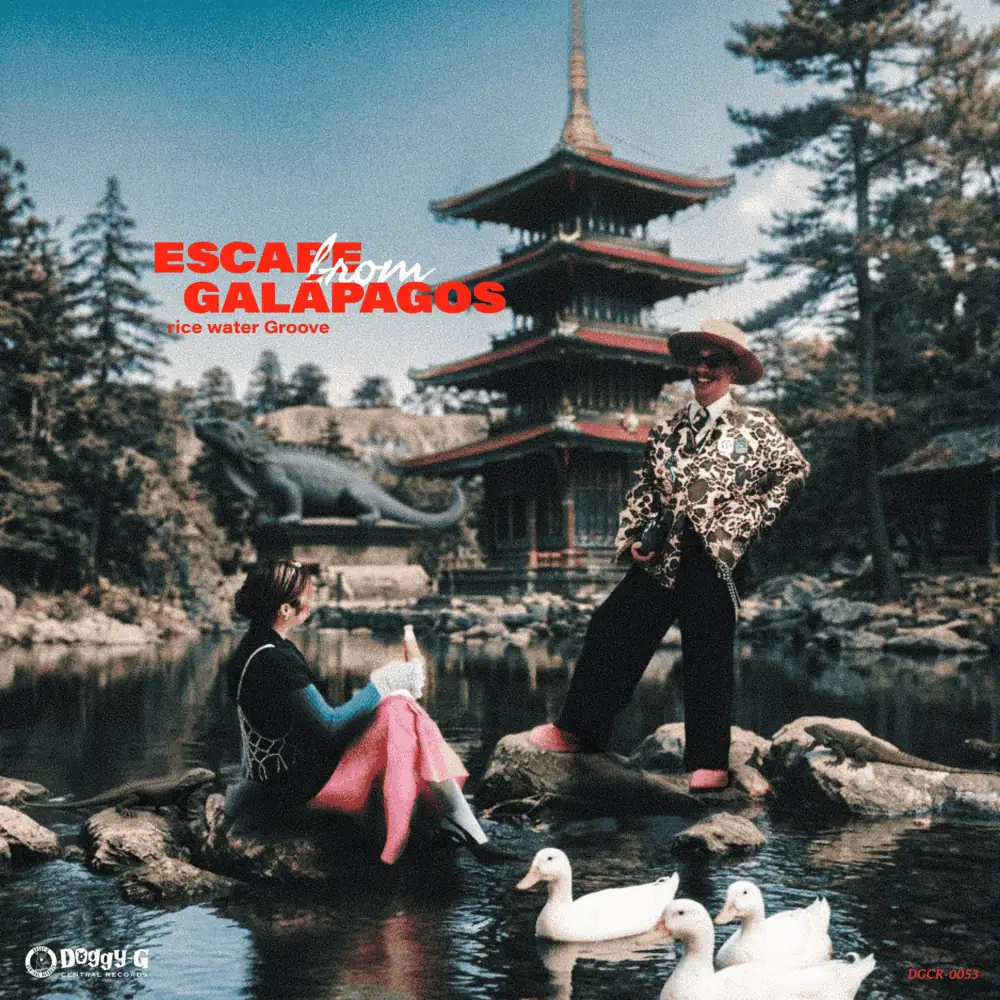
rice water Groove’s ESCAPE from GALAPAGOS Feels Like a Break From the Mainstream and a Step Into Something Else
By Eli Jesse
There are some albums that arrive with noise—big rollouts, heavy promotion, and instant viral moments.
Then there are projects that feel like they appear from somewhere quieter, almost as if they were never trying to compete with the mainstream in the first place.
ESCAPE from GALAPAGOS, the latest release from Japanese hip-hop group rice water Groove, fits more comfortably in the second category.
The project has quickly become a talking point among listeners who follow Japan’s more experimental and underground rap spaces. While it may not be the loudest release on the market, it carries a kind of creative confidence that feels intentional. It doesn’t try to chase trends or force itself into the center of attention. Instead, it leans into identity, atmosphere, and artistic direction.
And in today’s fast-moving music landscape, that alone makes it stand out.
ESCAPE from GALAPAGOS
rice water Groove · Out June 10, 2026 · Doggy G Central Records
| # | Title | Producer |
|---|---|---|
| 1 | 心満たすほど美味い飯を | TBS’93 |
| 2 | Super ensemble feat. ratiff | TBS’93 |
| 3 | What is the Galapagos | TBS’93 |
| 4 | Re:location feat. YAZZY BEATS | YAZZY BEATS |
| 5 | MIDNIGHT SWIM | TBS’93 |
| 6 | Private Resort feat. リベラル, BaramonK | TBS’93 |
| 7 | Getting Warmer feat. カミノ・ザ・ファンク | カミノ・ザ・ファンク |
| 8 | Chaos Theory | TBS’93 |
| 9 | MAGIC CARPET(8) feat. 谷本大河, basho, takeisme, 井石毅, yutyforce, youngleaf | TBS’93 |
| 10 | OFF/ON | yutyforce |
| 11 | matchless | TBS’93 |
| 12 | Ice melts (2026 Remastered) feat. BaramonK | TBS’93 |
| 13 | Get out! | TBS’93 |
| 14 | またここで feat. theeluu | theeluu |
The Meaning Behind “Galapagos” in Japanese Music Culture
To understand the weight of the album title, it helps to understand how the term “Galapagos” is often used in Japan.
In cultural discussions, “Galapagos” is frequently used to describe systems or industries that evolve in isolation—developing their own unique characteristics without heavy outside influence. In music, it often refers to scenes that grow independently from global trends.
So when a group names a project ESCAPE from GALAPAGOS, it naturally raises questions.
Is this about breaking out of isolation? Is it about connecting more globally? Or is it a reflection on the tension between staying local and going international?
rice water Groove doesn’t hand over a simple answer, and that ambiguity feels intentional. The title works more like a statement of thought rather than a clear explanation.
It suggests movement, change, and possibly frustration—but also curiosity about what exists outside familiar boundaries.
A Sound That Doesn’t Try to Fit In
What makes rice water Groove interesting in Japan’s hip-hop ecosystem is not just the music itself, but how it positions itself within the wider scene.
Japanese hip-hop today is extremely diverse. On one end, there are mainstream artists filling large venues and charting nationally. On the other end, there are underground collectives experimenting with sound, structure, and identity in ways that don’t always follow commercial rules.
rice water Groove sits closer to the latter.
Instead of focusing on radio-friendly structure or predictable song formats, ESCAPE from GALAPAGOS leans into mood and texture. The project feels less like a collection of singles and more like a continuous creative statement. It invites listeners to sit with it rather than consume it quickly.
That approach might not always translate into viral success, but it builds something more long-term: identity.
And in underground scenes, identity often matters more than immediate attention.
Why This Release Matters in Today’s Japanese Hip-Hop Scene
Japanese hip-hop is currently in a unique phase.
Over the past few years, the genre has expanded its global visibility through streaming platforms, international collaborations, and social media discovery. More Japanese artists are being heard outside Japan, and the sound of Japanese rap is no longer confined to domestic audiences.
But at the same time, this growth has created a kind of creative split.
Some artists are leaning toward global appeal, while others are choosing to remain deeply rooted in local experimentation and cultural independence.
ESCAPE from GALAPAGOS feels like it belongs in that second space.
It reflects a side of Japanese hip-hop that isn’t necessarily trying to export itself, but instead trying to define itself more clearly from within.
That distinction is important.
Not every project is meant to be global. Some are meant to preserve artistic freedom, even if that means staying outside the spotlight.
The Underground Still Shapes the Culture
While mainstream attention often goes to charting artists or viral hits, much of Japanese hip-hop’s creative evolution still comes from underground spaces like this.
Groups like rice water Groove contribute to the scene in a different way. They push boundaries quietly. They experiment without pressure to conform. They influence other artists indirectly through ideas rather than commercial dominance.
Over time, these smaller projects often become reference points for future sounds.
What may seem niche today can become foundational tomorrow.
That’s one of the quiet realities of hip-hop culture in Japan—the underground is not separate from the mainstream. It is often where the mainstream eventually draws its next direction from.
Listening Without Expectations
One of the most interesting ways to approach ESCAPE from GALAPAGOS is without expecting it to behave like a typical album release.
It doesn’t appear to be built for instant consumption or quick judgment. Instead, it feels like a project designed for listeners who spend time with music, who return to albums more than once, and who pay attention to atmosphere as much as lyrics or structure.
That kind of listening experience is becoming less common in an era of short-form content and algorithm-driven discovery. But it still exists, especially in underground communities where albums are treated as complete artistic statements rather than collections of individual tracks.
rice water Groove seems aware of that audience.
And ESCAPE from GALAPAGOS feels like it was made with them in mind.
A Small Release With a Bigger Signal
Not every important moment in music arrives with global headlines.
Sometimes it comes quietly, through projects that don’t immediately announce their importance but reveal it over time.
ESCAPE from GALAPAGOS may not be positioned as a major commercial release, but it reflects something broader happening in Japanese hip-hop: a continued push toward artistic independence, identity formation, and creative experimentation outside of mainstream expectations.
In that sense, the album becomes more than just a new entry in a discography.
It becomes part of a larger conversation about what Japanese hip-hop is, and what it is still becoming.
And for listeners paying attention to that evolution, rice water Groove’s latest project is worth sitting with—not just hearing once, but returning to over time.
Because sometimes, the most interesting releases are the ones that don’t rush to explain themselves.
They let the music speak first.
Suggested Images
- rice water Groove group photo or live performance
- Abstract visual representing ESCAPE from GALAPAGOS
- Tokyo underground venue crowd shot
- Studio or creative session imagery
Suggested Video
- Official audio release or visualizer for ESCAPE from GALAPAGOS