
A New Era for Japanese Hip-Hop
By hiphoptokyo Staff | December 25, 2025
As the final neon lights of 2025 flicker across Shibuya Crossing, the Japanese hip-hop scene isn’t just looking at a new calendar—it’s looking at a complete structural overhaul. If 2024 was about the global viral explosion of tracks like “Bling-Bang-Bang-Born,” and 2025 was defined by the triumphant return of “Day One” legends, 2026 is set to be the year where the traditional boundaries of the industry finally dissolve.
From the rise of the “Self-Producing Princess” to the aggressive, distorted energy of Rage Rap and the economic ripple effects of “Sanaenomics,” here is the definitive 1,000-word forecast on the trends, artists, and shifts that will define 2026.
1. The H//PE Princess Era: The Evolution of the “Baddie”
For years, the narrative of female rap in Japan was one of struggle against a male-dominated idol industry. However, the success of icons like Awich and LANA has paved a golden road for a new kind of star.
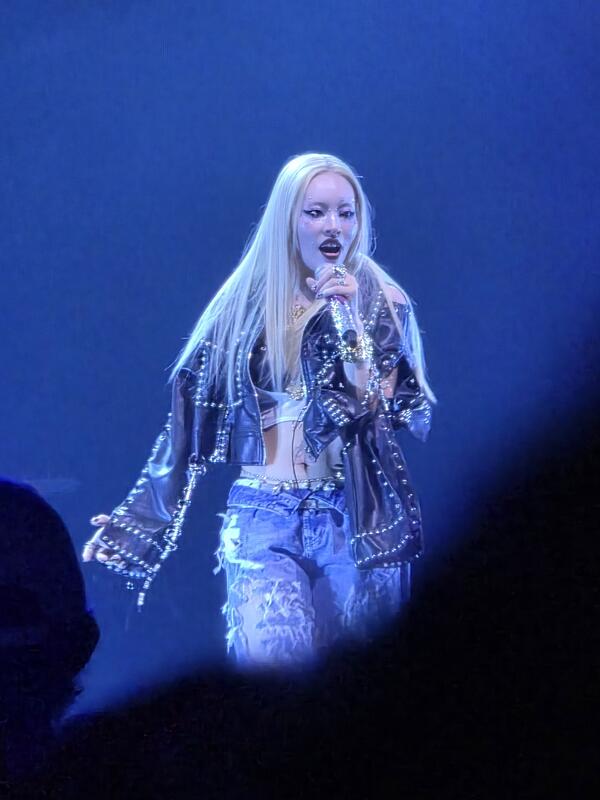
The single most significant event for the 2026 first-quarter charts is the official debut of H//PE Princess. Born from the grueling 10-week journey of the Korea-Japan joint project Unpretty Rapstar: Hip Pop Princess, this seven-member powerhouse—consisting of Kim Do-i, Kim Su-jin, Coco, Nam Yu-ju, Niko, Rino, and Yoon Seo-young—is not your typical “idol” group.
Throughout the competition, these artists proved they could handle every facet of the creative process: from writing their own bars and composing choreography to overseeing styling and video production. Their debut marks the transition from the “Girl Crush” trope to the “Self-Produced Baddie.” In 2026, expect H//PE Princess to dominate the “simultaneous debut” market in Tokyo and Seoul, forcing major labels to prioritize technical rap skill over mere visual appeal.
2. The Rage Revolution: Distortion as the New Pop
While melodic trap has been the industry’s “safe” bet for half a decade, a darker, more aggressive sound is bubbling up from the underground. Rage Rap, characterized by its high-energy synth leads and heavily distorted 808s, is set to be the sonic signature of 2026.
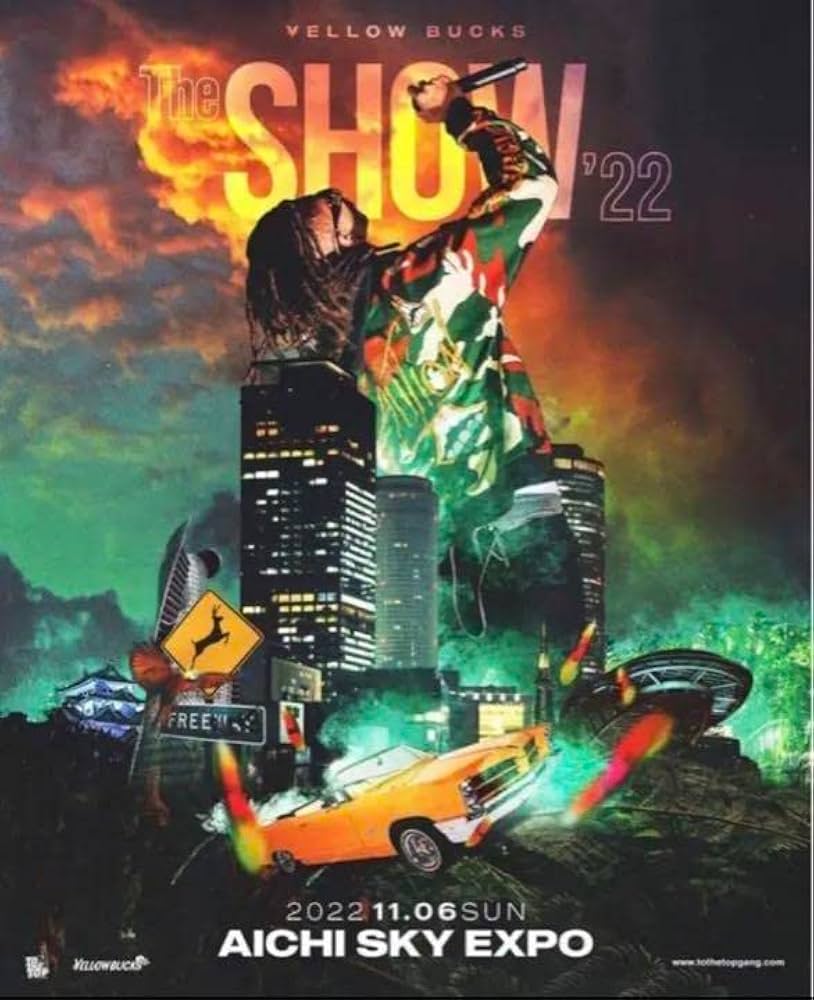
Leading this charge is Yuki Chiba. Fresh off his historic 2025 solo show at the Nippon Budokan, Chiba has become the face of a movement that rejects the “polished” sound of J-Pop. Alongside him, the 2026 POP YOURS festival lineup—which has already announced LANA, Yuki Chiba, and KEIJU as headliners for its first-ever three-day run—signals a shift toward “Harder” mainstream sounds. When the 30,000-capacity Makuhari Messe shakes to the distorted bass of Rage Rap in April 2026, the transition will be complete.
3. “Konbini Chic” and the Retro-Futurist Aesthetic
Streetwear and hip-hop have always been inseparable in Tokyo, but the venue is changing. Thanks to NIGO’s appointment as Creative Director for FamilyMart, the “neighborhood convenience store” has become a legitimate fashion destination.
The spring 2026 rollout of NIGO’s first full “Convenience Wear” collection will solidify the “Konbini Chic” trend. This movement blends high-end design sensibilities with the extreme accessibility of the konbini. Visually, 2026 will be dominated by a “Retro-Futurist” Y2K revival—think Muque’s blend of Nintendo Wii-era soundscapes and early 2000s streetwear, updated for a high-tech generation. The “Heisei Retro” boom isn’t dying; it’s just getting a firmware update.
4. Sanaenomics and the Decentralized Scene
The macro-economic landscape of 2026, dubbed “Sanaenomics” after Prime Minister Sanae Takaichi, is expected to bring a meaningful recovery to Japan’s domestic economy. With real wages projected to turn positive and private spending on the rise, the “local” music scene is thriving.
We are seeing a massive shift away from Tokyo-centric industry power. The Okinawa Wave—led by the 604 crew and artists like Tsubaki and Kohjiya—has proven that you can headline the Budokan without moving to the capital. In 2026, “Mumbai-to-Tokyo” and “Naha-to-Shibuya” digital bridges will be more important than physical presence in Harajuku. Decentralization is no longer a theory; it is the economic reality for the next generation of independent rappers who are leveraging “crisis-management investment” to build their own local empires.
5. The Hybrid Sound: AI and the Digital Fanbase
By 2026, the use of AI in music production will move from a “cheat code” to a standard instrument. We are entering the era of the Hybrid Artist, where human charisma is amplified by AI-driven soundscapes.
The “faceless” artist trend—which began with acts like LAVT—is evolving into a full Metaverse experience. As Tokyo continues to build its digital infrastructure, expect “Virtual World Tours” to become as lucrative as physical club runs. Fans in 2026 won’t just listen to a track; they will enter a 3D environment designed by the artist, where AI-generated remixes provide a unique experience for every listener.
6. 2026 Trend Forecast: The “Global Zipangu”
The final trend for 2026 is the “Global Zipangu” effect. Japanese hip-hop is no longer just “good for Japan.” With the announcement of the “Zipangu” Japanese Music Event 2026 at the Rose Bowl in Los Angeles, artists like Ado, Chanmina, and Yuki Chiba are taking the Tokyo sound to global stadiums.
This international recognition is feeding back into the domestic scene, creating a sense of pride and a “Global Standard” for production quality. In 2026, a rapper from Kawasaki isn’t just competing with a rapper from Shibuya; they are competing with the best in the world.